Water Sort: Color Match
- 4.8
- Rating
- 5.00M
- Installs
- Free
- Price

 Analysis by App-foxy
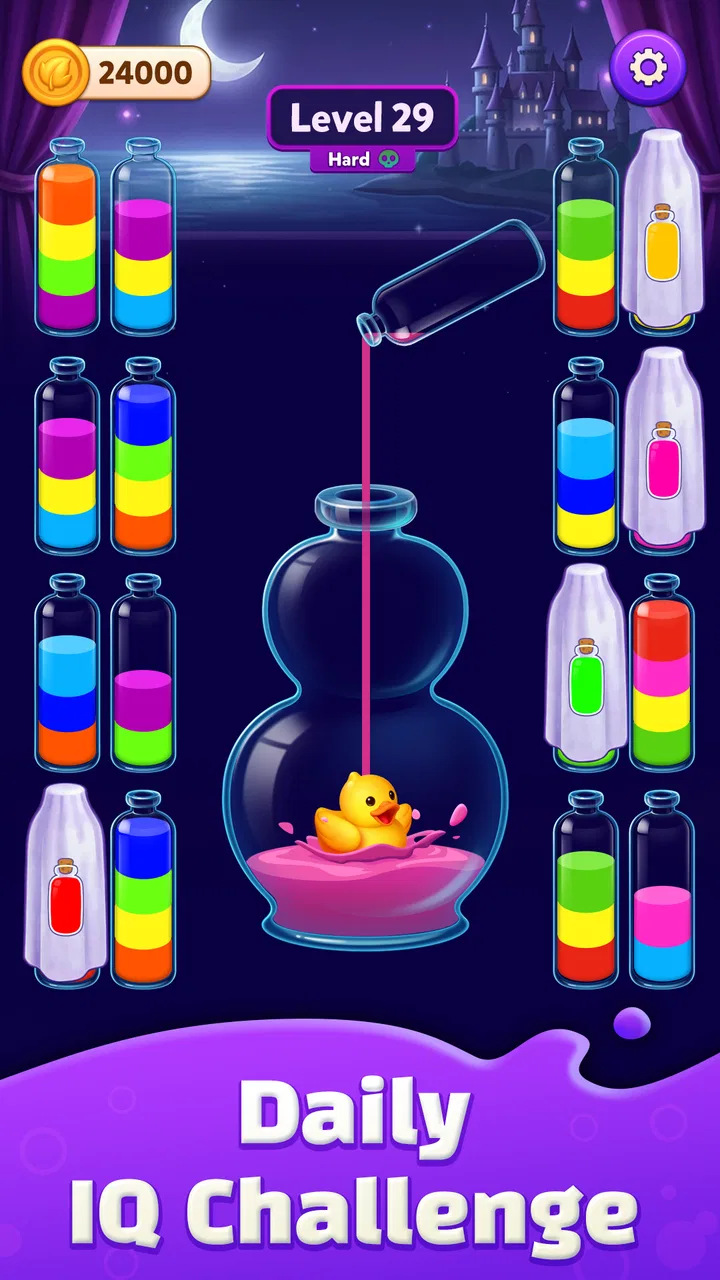
I spent time with Water Sort: Color Match as the kind of casual puzzle I can open for a few minutes without needing a long explanation or a complicated setup. The idea is immediately familiar: colored liquid sits in containers, and I pour it between them until matching colors are grouped together. That simple action makes the game easy to understand, but the decisions become more interesting once empty space starts to matter.
My first impression was that this is aimed at relaxed, low-pressure play rather than dramatic competition. It works well when I want something quiet while waiting for an appointment, taking a short break, or winding down before bed. The game is free to access, carries an Everyone age rating, and comes from FunForge Studios. It is listed as a casual game, which feels accurate: the appeal is in small logical decisions, not in a large story, fast reflexes, or a demanding control scheme.
How the puzzle feels in everyday play
Each puzzle asks me to think about order, space, and consequences. A pour that looks helpful can create a problem if it fills the only container I needed for another color. That is where the game earns its attention. The controls are straightforward, but solving a board cleanly requires me to look beyond the immediate move.
You May Also Like

 Google Keep - Notes and lists
Google Keep’s Quiet Growth Shows the Appeal of Simpler Notes
As mobile work gets busier, Google Keep keeps winning a simple contest: capture a thought quickly, find it later, and get on with the day.

 Blood Strike: 2.5 Anniversary
Blood Strike’s Loadouts Turn Every Drop Into a Tactical Gamble
A close look at Blood Strike’s custom loadouts: how fast access to signature weapons reshapes its battle royale rhythm, rewards preparation, and narrows the gap between fights.

 Pandora - Music & Podcasts
Pandora’s Music Is Easy to Start, but Harder to Recover
Pandora’s strength is its low-effort path from a seed to a station. Its weak spot is how much confidence it asks you to place in connection, setup, and quiet recovery.

 8 Ball Pool
 Is Built on Rivalries, Rematches, and Routine
A close look at the rivalries, rematches, shared routines, and unanswered safety questions that turn a quick pool match into a persistent mobile community.

 Samsung Music
’s Quiet Strength Is Playing What You Already Own
Its reach comes less from spectacle than from dependable access to a personal library. That simplicity is both the app’s strongest retention engine and its ceiling.

 AccuWeather: Weather Radar
AccuWeather Review: A Quick, Clear Forecast for Everyday Decisions
For everyday plans, the best forecast is the one you can understand quickly. AccuWeather makes rain timing, radar, and local conditions easy to act on, with a few trade-offs.
More From Our News Desk



I particularly like the way the game turns a basic sorting task into a short planning exercise. I can usually begin by identifying colors that already have a natural destination, then work out which containers should remain open. The best move is not always the one that combines the most liquid. Sometimes the correct choice is to use an empty container temporarily, even though it feels like I am making the board messier.
That temporary-storage idea is one of the most useful habits to develop. When I treat every empty container as a limited resource rather than a convenient dumping place, the puzzles become more manageable. I also try to avoid breaking apart a useful stack unless I already know where its top color can go. This is a small distinction, but it separates deliberate play from random pouring.
The game is easy to pick up because there is no need to memorize a complicated rule set. A new player can understand the basic goal quickly, while someone who enjoys logic puzzles can focus on improving their planning. That broad accessibility is a strong fit for a family-friendly casual title, especially with the Everyone rating.
A calm game that still rewards careful decisions
The relaxing quality comes from the pace. I am not racing another player, and nothing about the basic concept requires fast tapping. I can pause mentally between moves and reconsider the board. That makes it suitable for people who enjoy puzzles but do not want the pressure found in timed challenges or competitive match systems.
At the same time, “relaxing” does not mean every board is effortless. A careless pour can leave a color trapped beneath another one, forcing me to rethink the sequence. I found that the game is most enjoyable when I accept that a failed attempt is useful information. Instead of tapping randomly after a mistake, I can identify the move that caused the blockage and restart with a better plan.
A realistic use case is a short evening break. I might play one puzzle while waiting for tea to steep, then stop without feeling that I have left a story unfinished. It also suits a commute or a waiting room, provided I am comfortable playing without treating every session as a major achievement. The compact nature of the puzzle format makes it easier to fit around ordinary routines than a game that expects a long uninterrupted session.
What the free access means for value
The game is free, so the initial decision is simple: I can try the core experience without paying an entry fee. That matters for this genre because the basic sorting idea is easy to understand from the first board. I do not need to commit money before discovering whether arranging colors is satisfying for me.
There are in-app purchases ranging from $0.99 to $79.99 per item. I would treat that range carefully rather than assuming every player needs to spend. The free starting point gives the game a fair trial, while the purchase options mean the eventual cost depends on whether I choose to buy something. For anyone evaluating value, the important distinction is that free access and paid extras are not the same thing: the game can be tested at no charge, but a player who makes purchases should decide on a personal spending limit first.
I also would not describe the game as automatically inexpensive simply because it is free to install. The lower-priced purchase point may feel easy to justify, while the upper end is a much more serious commitment for a casual puzzle. Since the enjoyment comes from the sorting activity itself, I would only pay if an optional purchase clearly improves my own experience. I would not buy merely because I felt pressured to keep up with a progress goal.
That is the practical value test I used: play it free first, decide whether the puzzle loop remains enjoyable after the novelty fades, and only then consider spending. This approach protects the main strength of the title, which is its low-friction entry, without pretending that every optional purchase has equal value for every player.
Small strategies that make difficult boards clearer
My most reliable method is to scan the top color in every container before making the first pour. The visible top layer determines what can move immediately, but the layer underneath tells me what I may accidentally expose. I try to plan at least two moves ahead, especially when a container is nearly full.
A second useful technique is to keep one working container deliberately flexible. If I fill every available space too early, I lose the ability to rearrange the board. Leaving a container open can look inefficient, but it often gives me the room needed to uncover a hidden color later. This is more effective than treating every available slot as something that must be filled.
I also separate “progress” from “completion.” Combining two matching layers is progress, but it is not automatically a good move if it blocks access to another color. When I judge a move by what it reveals next, rather than by how tidy the containers look immediately, I make fewer dead-end decisions.
For a particularly awkward board, I would recommend mentally labeling the colors by position rather than by name. For example, I can think of them as the color at the left, the color in the middle, and so on. That reduces hesitation when several shades look similar on a small screen. It is a simple habit, but it helps keep the plan organized without turning a casual game into a written exercise.
Where the experience may lose some players
The same simplicity that makes the game approachable can also limit its appeal. If I want a rich narrative, character development, competitive rankings, or a broad collection of game modes, this is not the right destination. The central activity is sorting liquid by color, and the enjoyment depends on whether that loop continues to feel rewarding.
Players who dislike restarting after a poor sequence may find the puzzle structure frustrating. A board can become difficult because of one earlier decision, and casual experimentation is not always as satisfying as a carefully planned attempt. I enjoy that consequence because it makes each move matter, but someone looking for completely frictionless relaxation may prefer a game with more forgiving mechanics.
There is also a difference between visual calm and mental effort. The presentation may suggest an easygoing experience, yet the later decisions can require concentration. I would not choose it when I want something I can play entirely on autopilot. A simple matching game or an idle app may be better for that mood, while this title is stronger when I want a quiet puzzle that still asks me to think.
The purchase structure is another point to consider. Free access is useful, but the presence of optional items means I would review each purchase carefully before confirming it. A family sharing a device should be especially clear about who is allowed to spend. The Everyone rating describes the age suitability of the game, not a promise that every player will find the optional spending model equally comfortable.
How it compares with familiar alternatives
Compared with a traditional match-three game, this feels slower and more deliberate. Match-three play often rewards scanning for combinations and reacting to a changing board. Here, I am arranging containers and preserving space, so the challenge is closer to a compact logic exercise than a chain-reaction arcade puzzle.
Compared with a crossword or number puzzle, the visual sorting is more immediate. I do not need to work through clues or calculations, and the result of a pour is easy to see. However, the game offers less variety in the type of reasoning. A person who enjoys language, arithmetic, or deduction may find a dedicated puzzle app more satisfying over a longer period.
Compared with a minimalist block puzzle, the key trade-off is reversibility. In a block game, the board may change because pieces arrive or lines clear. In this water-sorting format, the main challenge is deciding whether a move preserves future options. That makes it a good choice for someone who likes planning in a contained space, but less suitable for someone who wants constant visual change.
I would also choose it over a competitive casual game when I want control over my own pace. There is no need to compare my performance with another person in order to enjoy a board. On the other hand, if social competition is what keeps me engaged, a multiplayer alternative would probably provide stronger long-term motivation.
Who is likely to get the most from it
This game is a good match for casual puzzle fans who like clear rules, short sessions, and decisions that become more demanding gradually. It can also work for families because the basic objective is easy to explain and the age rating is Everyone. An adult can enjoy the planning layer while a younger player can focus on matching visible colors and learning how container space works.
It is especially useful for people who want a low-pressure mental break. I can play a board while taking a short pause from work, then put the phone away without needing to remember a complicated quest or return at a particular time. That makes the game more practical than many larger mobile titles, even if it is less varied.
I would suggest it to someone who enjoys organizing tasks visually. The pleasure is similar to putting objects into the right groups, except the order of operations matters. Players who naturally think about temporary storage, blocked access, and sequencing may find the puzzles satisfying sooner than players who prefer immediate rewards.
I would skip it if I need a strong sense of progression beyond the sorting boards, or if I become bored with repeating one central mechanic. I would also look elsewhere if my priority is a story, action, online competition, or a large collection of distinct activities. This is a focused casual game, and its value depends on appreciating that focus rather than expecting it to behave like a full-scale adventure.
Device fit and current version
The game supports devices running Android 6.0 or later, which gives it a broad compatibility range for Android users. I would still check the device before installing, particularly if I am using an older phone or managing space carefully. The current version is 1.1.5, so anyone troubleshooting should make sure the installed build is current before judging the experience.
Its casual format is well suited to touch controls because pouring is a direct action: select a container and move its contents to another. That simplicity is important on a small screen. I do not need a physical keyboard, a controller, or a large display to understand what is happening. The main limitation is that a smaller screen can make similar colors harder to distinguish, so I would play with the display at a comfortable brightness rather than rushing through a board.
The game has passed the scale test for many players, with over a million installs and a 4.8 average from around forty-two thousand ratings. Those figures suggest that the central concept has found a substantial audience, but they do not replace personal testing. A popular casual loop can still be a poor fit if I do not enjoy repeated sorting or if I prefer more varied challenges.
My value judgment
After playing it, I see Water Sort: Color Match as a sensible free try for anyone who wants a quiet, visual logic game. Its strongest quality is the balance between immediate understanding and gradual planning. I can begin without instruction, yet I still have room to improve by protecting empty space, reading the visible layers, and thinking beyond the next pour.
The value is clearest when I use it as a short, repeatable break rather than expecting a huge amount of content or a deep collection of systems. Free access lowers the risk of trying it, while the optional purchases mean I would keep spending deliberate and personal. I would not treat the existence of a purchase option as a reason to pay; I would pay only if the game had already earned that decision through sustained enjoyment.
My recommendation is therefore positive but specific. Install it if you like calm sorting puzzles and want something that can occupy a few spare minutes without demanding a story or a social commitment. Give it a miss if you need constant novelty, competition, or a more substantial progression system. For the right player, the best part is the quiet satisfaction of solving a board without rushing, and that is enough to make this casual title worth trying for free.
FAQs for Water Sort: Color Match
01What is Water Sort: Color Match, and how do you play it?
Water Sort: Color Match is a color-sorting puzzle game in which you pour colored liquid between bottles until each bottle contains only one color. The controls are simple: tap a bottle to select it, then tap another bottle to pour. You can pour only when the destination has enough space and contains the same color on top, so every move requires planning rather than quick reflexes.
02Is Water Sort: Color Match free to download and play?
The game can generally be downloaded and played without an upfront purchase, making it easy to try several levels before deciding whether it suits you. However, free puzzle games commonly include advertising, optional in-app purchases, or both. The exact pricing, ad frequency, and available purchases may vary by platform and update, so check the Google Play Store or App Store listing before downloading.
03Does Water Sort: Color Match work offline?
Many of the core sorting levels can usually be played without a constant internet connection, which makes the game convenient for travel, waiting rooms, or other situations with limited connectivity. Nevertheless, internet access may still be required for advertisements, cloud features, analytics, updates, or optional rewards. If offline play is important to you, test the game after disabling mobile data and Wi-Fi.
04Is Water Sort: Color Match suitable for children and casual players?
The game is easy to understand and does not require complex controls, so it can be suitable for casual players and older children who enjoy logic puzzles. Difficulty normally increases as more colors and bottles are introduced. Parents should still review the store age rating and privacy information, particularly because advertising or optional purchases may be present depending on the version installed.
05What should I know about hints, undo options, and difficult levels?
Water Sort: Color Match is designed around careful planning, but some levels can become difficult if you pour colors in the wrong order. Depending on the version, the game may provide undo buttons, extra moves, hints, level resets, or the option to watch an advertisement for assistance. These features can make progress easier, although players who prefer a completely challenge-focused experience may choose to solve levels without them.
Pros
- Simple rules make it easy to start playing immediately.
- Bright colors and clean visuals make tubes easy to distinguish.
- Levels gradually introduce more challenging sorting combinations.
- Offline play is convenient for travel or areas without internet.
- Short puzzles fit well into quick breaks or casual sessions.
Cons
- Later levels can feel repetitive because the core mechanic rarely changes.
- Some puzzles may require trial and error rather than pure planning.
- Frequent ads may interrupt the flow between completed levels.
- Color-based gameplay may be difficult for some color-blind players.
- Limited variety in objectives can reduce long-term replay value.

Water Sort: Color Match
Gallery